
Freedom Valley Harley-Davidson® - Which cruiser offers the stronger real-world performance for Allentown, PA riders — 2026 Harley-Davidson® Low Rider® ST or 2026 Indian Super Scout?
Riders around Allentown, PA ask a straightforward question when they narrow their choices to two heavy hitters: which of these twins does better when the road stops being a spec sheet and starts becoming a real ride — the 2026 Harley-Davidson® Low Rider® ST or the 2026 Indian Super Scout? On paper, both are compelling. On the road, key differences in engine character, chassis design, and rider aids create very different personalities. This guide breaks down how each bike behaves where it matters most — rolling starts, midcorner composure, braking feel, and long-mile comfort.
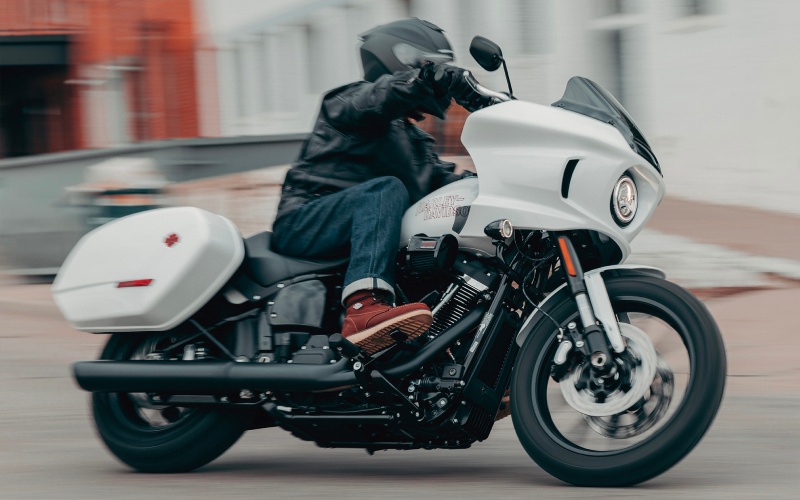
The short version is that each machine has a clear identity. The Super Scout is a highly approachable cruiser with a revvier 1,250 cc, 60-degree, liquid-cooled V-Twin, a 4-inch RIDE COMMAND display with built-in GPS, and standard touring amenities like saddlebags, a quick-release windshield, and passenger accommodations. The Low Rider® ST is purpose-built for high-speed stability and torque-rich thrust, anchored by a frame-mounted FXRT-inspired fairing, an inverted 43 mm fork, a hidden monoshock with hydraulic preload, and the Milwaukee-Eight® 117 High Output engine. If your rides mix in traffic merges, rough patches, and long stretches at a steady clip, those design choices shape what you feel at the bars and in the seat.
Engine character that changes your ride
At the core of every comparison is engine feel. The Low Rider® ST’s 117 H.O. punches out a factory-rated 114 horsepower and 128 ft-lbs of torque at 4,000 rpm. That translates to easy roll-on acceleration without hunting for lower gears — ideal for passing, for climbing grades, and for getting up to speed cleanly on highways surrounding the Lehigh Valley. The Super Scout’s 1,250 cc mill produces a claimed 105 horsepower and 82 ft-lbs at 6,300 rpm, a combination that prefers to be spun up. It’s fun when you’re in the mood, but in everyday situations, the Harley-Davidson® delivers thrust with less effort.
Tied to that is gearing and response. The Low Rider® ST’s 2-into-1 exhaust and Heavy Breather intake sharpen response across the midrange, while broader gear spacing lets you hold a gear through changing traffic speeds. The Super Scout’s transmission complements its revvier engine, but you’ll typically shift more to stay in the meat of the power.
Stability and steering feel on imperfect pavement
Frame-mounted versus quick-release makes a big difference. The Low Rider® ST’s fairing is bolted to the chassis, not the handlebars, so steering inputs stay precise when wind or turbulence picks up. Pair that with an inverted 43 mm fork and a monoshock rear, and you get a front end that resists dive and a rear that you can preload for cargo or a more supportive feel. The Super Scout’s windshield offers convenience and effective wind deflection, but because it isn’t frame-mounted, it can’t provide the same stabilizing effect on the bars. Its 41 mm telescopic fork and dual rear shocks are straightforward and work well for relaxed cruising, yet they can’t match the composure you feel when pushing the Harley-Davidson® through back-road sweepers.
Wheel and tire choices also color the ride. The Low Rider® ST’s Radiate Cast Aluminum wheels with Michelin® Scorcher 31 tires feel keyed into the pavement with quick, predictable transitions. The Super Scout’s 16-inch wire-spoke wheels and Pirelli® MT60RS tires give a classic look and good grip, but steering feedback is different — and the Harley-Davidson® setup feels more precise when you’re braking and turning at the same time.
Braking confidence and cornering support
Braking hardware and rider aids determine how confident you can be in tricky moments. The Low Rider® ST features a 4-piston fixed front caliper and a 2-piston rear, and brings Rider Safety Enhancements with cornering functionality: Cornering Enhanced Anti-lock Brake System (C-ABS), Cornering Enhanced Traction Control System (C-TCS), and Cornering Drag-Torque Slip Control System (C-DSCS). Those systems aim to keep inputs smooth and controlled as lean angle changes. The Super Scout includes ABS and Traction Control but does not specify cornering-augmented variants. On wet mornings, painted lines, or gravelly shoulders, the Harley-Davidson® advantage can be felt in calmer stops and cleaner drive off the apex.
Range, ergonomics, and daily usability
Range matters more than many expect. The Low Rider® ST carries 5 gallons of fuel, which stretches the distance between fill-ups on longer loops. The Super Scout’s 3.4-gallon capacity is fine for shorter outings but reduces flexibility on long days. Both bikes offer a 4-inch display and cruise control, though the Indian adds in-dash GPS navigation. The Harley-Davidson® counters with a very clear status layout that includes TPMS, which is a daily confidence booster. Seat heights are approachable on both, with the Low Rider® ST at 27 inches laden and the Super Scout at 25.7 inches; shorter riders may appreciate the Indian’s extra reach to the ground, while the Harley-Davidson® puts the rider in a slightly more supportive, performance-leaning stance.
Who should choose which?
If you prioritize a revvier feel, factory navigation, and a classic cruiser aesthetic with touring add-ons, the Super Scout aligns well. If your priorities are torque-rich roll-on power, steering stability at speed, a planted chassis on imperfect pavement, and cornering-aware safety tech, the Low Rider® ST lines up squarely with those aims. For riders who split time between urban connectors and open two-lanes, the Harley-Davidson® simply asks less of you to get more done.
Frequently Asked Questions:
Which bike has the better highway stability for longer rides?
The Low Rider® ST. Its frame-mounted FXRT-inspired fairing reduces bar buffeting and stabilizes the front end in crosswinds, while the inverted fork and monoshock provide balanced support under braking and over expansion joints. The Super Scout’s windshield blocks air effectively and is convenient to remove, but it cannot add the same chassis stability because it’s not mounted to the frame.
From a local standpoint, that stability advantage shows up on I-476 and other corridors connecting the Lehigh Valley to regional destinations. Freedom Valley Harley-Davidson®, serving Allentown, PA, Trenton, NJ, and Norristown, PA, can help riders understand how that design translates to calmer miles in real conditions.