
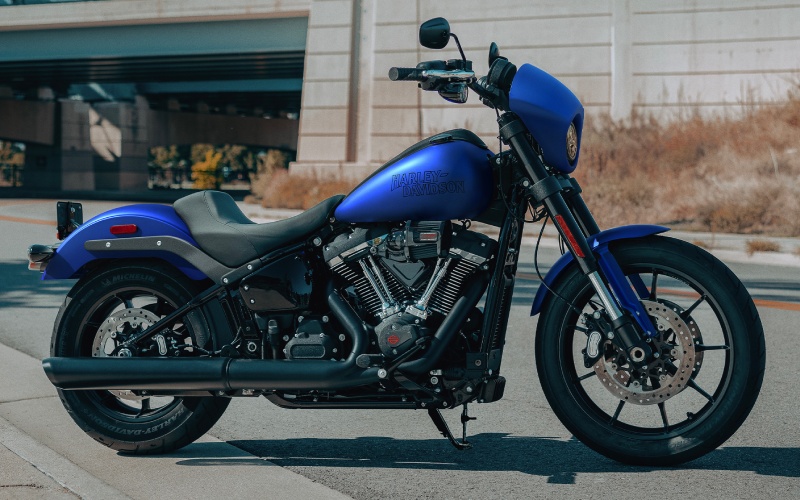
Freedom Valley Harley-Davidson® - Which cruiser pulls harder in real-world riding around Trenton, NJ — 2026 Harley-Davidson® Low Rider® S or 2026 Honda Rebel 1100 DCT?
When riders ask which bike delivers stronger, more confidence-inspiring roll-on power in everyday use, the conversation often lands here: the 117-cubic-inch V-Twin in the 2026 Harley-Davidson® Low Rider® S or the 1084 cc parallel-twin backed by the Dual-Clutch Transmission in the 2026 Honda Rebel 1100 DCT. Both are modern cruisers with selectable ride modes and standard ABS. Yet, in the decisive moments—slipping past a line of traffic, cresting a grade, or launching from a tight corner—their character and hardware tell different stories.
Engine character and real-world thrust
The Milwaukee-Eight® 117 High Output in the Low Rider® S makes a clear statement: abundant torque early and often, paired with a 2-into-1 exhaust and Heavy Breather intake to keep the engine responsive all the way through the midrange. Factory figures of 114 horsepower and 128 ft-lbs underscore how readily the Harley® surges when you crack the throttle at 3,000 to 5,000 rpm. The Rebel’s 1084 cc parallel-twin is smooth and flexible, with a pleasant delivery across its rev range. It’s effective for commuting and relaxed rides, but when you compare urgency at typical passing speeds, the Harley®’s larger displacement and tuning deliver a more decisive shove.
Transmission and control
Honda’s DCT is a standout technology. It enables fully automatic shifts or manual control via paddle shifters, easing fatigue and removing the chance of stalling. If you prioritize convenience and consistent shifts, DCT is a genuine advantage. The Low Rider® S counters with a crisp 6-speed manual that leverages the 117’s torque, letting you hold a gear through corners or short-shift and ride the wave. Add Drag-Torque Slip Control to stabilize the rear tire under downshifts, and the Harley® gives experienced riders a tactile connection that’s hard to replicate electronically.
Chassis and composure where it counts
Passing power is only as useful as the chassis that supports it. The Low Rider® S uses a 43 mm inverted fork and a hidden free-piston monoshock with hydraulic preload. This setup resists dive, keeps the tire planted, and soaks up mid-corner bumps—critical when you open the throttle while still on lean. The Rebel 1100 DCT employs a 43 mm conventional fork and dual rear shocks that are comfortable, but the Harley® has the edge in rigidity and stability as pace rises and surfaces get choppy.
Safety systems that back your inputs
Cornering-aware aids change the game in imperfect conditions. The Low Rider® S includes Cornering Enhanced ABS (C-ABS) and Cornering Enhanced Traction Control (C-TCS), plus Cornering Drag-Torque Slip Control (C-DSCS) and a Tire Pressure Monitoring System (TPMS). These systems work subtly to help maintain grip and stability when you brake or accelerate while leaned over. The Rebel 1100 DCT brings ABS and Honda Selectable Torque Control with multiple ride modes, which are absolutely helpful, but it does not add cornering-specific intervention or TPMS.
Range, ergonomics, and the miles between stops
Strong passing power is only half the story—having the range to enjoy it matters too. The Low Rider® S carries 5.0 gallons of fuel, complemented by an estimated 47 mpg, while the Rebel 1100 DCT lists 3.6 gallons. For riders who like to stretch a loop through river valleys and backroads without frequent stops, that difference is significant. Ergonomically, the Low Rider® S’s steep-backed solo seat and 27-inch laden seat height lock you into the bike, which helps you feel secure when you roll on hard to pass. The Rebel’s seat height and relaxed posture are approachable, but the Harley® seat support becomes an unsung hero when riding assertively.
Who should pick which?
If you want the most engaging roll-on acceleration with a planted, athletic chassis, the 2026 Harley-Davidson® Low Rider® S stands out. If you value an automatic gearbox and a TFT-forward interface with RoadSync connectivity, the 2026 Honda Rebel 1100 DCT is a compelling alternative. Many riders decide by asking a simple question: Would I rather have more control and torque on tap, or prefer an automatic that makes shifting effortless? There’s no wrong answer—just different priorities.
- Passing power feel: The Low Rider® S delivers a deeper torque well for quick, confident overtakes at typical highway speeds.
- Chassis stability: Inverted fork and monoshock poise help the Harley® stay composed when you add throttle on lean.
- Tech priorities: Prefer an automatic and TFT connectivity? The Honda’s DCT and RoadSync shine; prefer cornering-aware safety and TPMS? That’s the Harley® lane.
- Range and rhythm: A 5-gallon tank on the Low Rider® S supports longer loops with fewer interruptions.
Frequently Asked Questions:
Which bike offers more confident midrange roll-on for passing?
The 2026 Harley-Davidson® Low Rider® S. Its Milwaukee-Eight® 117 High Output produces stronger claimed horsepower and torque, translating to faster, more authoritative roll-on between 40 and 70 mph.
Does the Rebel 1100 DCT’s automatic transmission reduce rider control?
No. Honda’s DCT offers both automatic and manual paddle-shift modes. It’s excellent for convenience and consistency. Riders who want a more analog, connected feel may prefer the Low Rider® S’s 6-speed manual and strong engine braking.
Which bike has more advanced cornering safety aids?
The Low Rider® S. It includes Cornering Enhanced ABS, Cornering Enhanced Traction Control, and Cornering Drag-Torque Slip Control, plus TPMS. The Rebel 1100 DCT provides ABS and Honda Selectable Torque Control but not cornering-aware systems or TPMS.
Freedom Valley Harley-Davidson® is proudly serving Allentown, PA, Trenton, NJ, and Norristown, PA, with guidance grounded in real-world riding. Our goal is to help you match your priorities—power, control, comfort, and technology—to the right machine so every mile feels dialed in.