
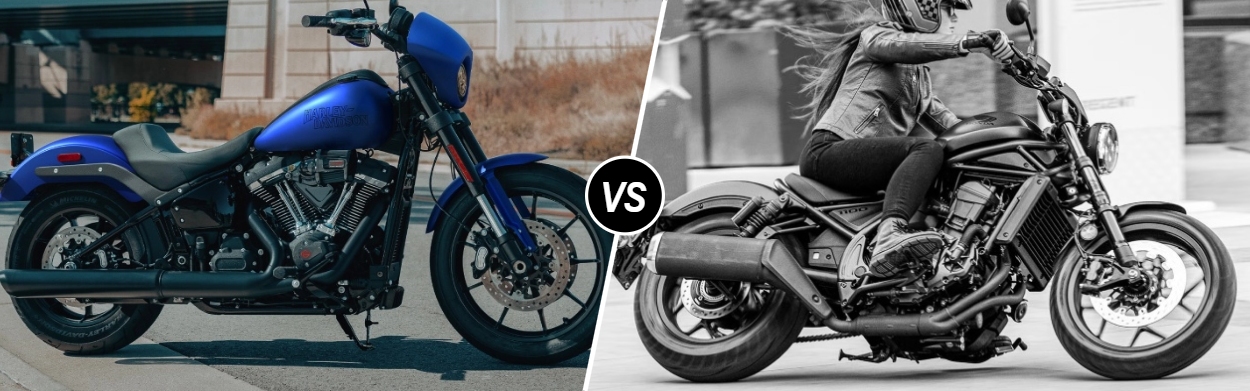
2026 Harley-Davidson® Low Rider® S vs 2026 Honda Rebel 1100 DCT
Riders around Bucks County know the roads deliver as much character as the bikes themselves, from rolling twists near Lake Nockamixon to the long, open stretches of Bethlehem Pike. That’s exactly where a head-to-head like 2026 Harley-Davidson® Low Rider® S vs 2026 Honda Rebel 1100 DCT comes alive. On paper, both are compelling middleweight power cruisers with tech-forward rider aids. In the saddle, they feel very different. The Low Rider® S is built around the Milwaukee-Eight® 117 High Output, a torque-rich V-Twin tuned for immediate thrust and confident cornering, while the Rebel 1100 DCT leans on a parallel-twin with an automatic Dual-Clutch Transmission and a modern electronics package. For riders who want a sharper edge and bigger lungs, the Low Rider® S delivers a visceral, athletic feel that thrives on Bucks County backroads and the faster flow toward Allentown, PA, or down past Trenton, NJ. At Freedom Valley Harley-Davidson® in Sellersville, PA, we know how our community rides: decisive torque, stable chassis geometry, and intuitive controls matter more than spec-sheet novelty. That’s precisely why our recommendation points to the Low Rider® S.
| Feature | 2026 Harley-Davidson® Low Rider® S | 2026 Honda Rebel 1100 DCT |
|---|---|---|
| Milwaukee-Eight® 117 High Output V-Twin | Yes | No |
| Cornering ABS and Cornering Traction Control | Yes | No |
| Selectable Ride Modes | Yes | Yes |
| Inverted 43 mm front fork | Yes | No |
| Heavy Breather intake with performance 2-into-1 exhaust | Yes | No |
| Tire Pressure Monitoring System (TPMS) | Yes | No |
| All-LED lighting package | Yes | Yes |
| 5.0-gallon fuel tank | Yes | No |
| Rear monoshock suspension with hydraulic preload | Yes | No |
| Automatic Dual-Clutch Transmission (DCT) | No | Yes |
Key Features
The Low Rider® S stacks the deck with performance-first hardware and confidence-building tech. The Milwaukee-Eight® 117 High Output puts down a factory-claimed 114 horsepower and 128 ft-lbs of torque, fed by a Heavy Breather intake and exhaled through a performance-tuned 2-into-1 exhaust. An inverted 43 mm front end and a hidden, free-piston monoshock with hydraulic preload give the chassis a planted, controlled feel whether you’re threading sweepers west of Sellersville or accelerating onto Route 309. Harley-Davidson® Rider Safety Enhancements are standard, including Cornering Enhanced ABS (C-ABS), Cornering Enhanced Traction Control (C-TCS), Cornering Drag-Torque Slip Control (C-DSCS), and TPMS. Add selectable Ride Modes and an all-LED lighting package, and you have a factory machine that’s thoroughly dialed. The Honda Rebel 1100 DCT counters with its hallmark automatic Dual-Clutch Transmission, a 1084 cc parallel-twin, Honda Selectable Torque Control with multiple ride modes, ABS, cruise control, and a 5-inch TFT with RoadSync connectivity. Those features are modern and friendly, but the Rebel 1100 DCT does not bring cornering-optimized ABS/TC, an inverted fork, TPMS, or a monoshock rear. If your priorities are heightened chassis response, stronger corner-entry confidence, and a broad torque plateau, the Low Rider® S has the hardware advantage straight from the crate.
Dimensions
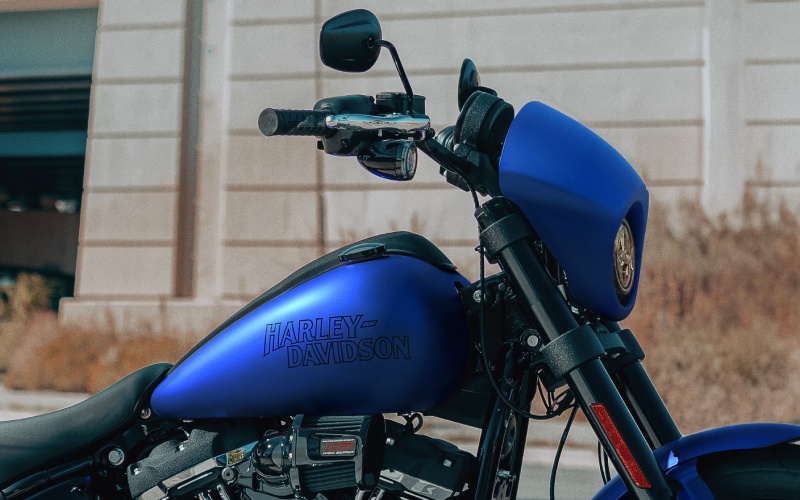
Ergonomics and stance shape every ride. The Low Rider® S carries a 27-inch laden seat height that keeps you in the bike rather than on it, anchored by a steep-backed solo seat that supports hard acceleration and steady cornering. A 63.6-inch wheelbase, 28 degrees of rake, and 5.7 inches of trail add up to mid-corner stability without dulling turn-in. Fuel capacity is a long-haul-friendly 5.0 gallons, making weekend loops across Bucks County simpler to plan. In contrast, the Rebel 1100 DCT lists a 27.9-inch seat height, a shorter 59.8-inch wheelbase, and 3.6 gallons of fuel. The shorter geometry is nimble at low speeds, and its curb weight is lighter than the Harley®; however, the Low Rider® S pairs its larger tank and longer wheelbase with suspension and braking components that shine as speeds rise or pavement degrades. For riders who often stretch a ride past in Sellersville, PA into the countryside and back, the Harley® layout better balances range, poise, and comfort.
Engine
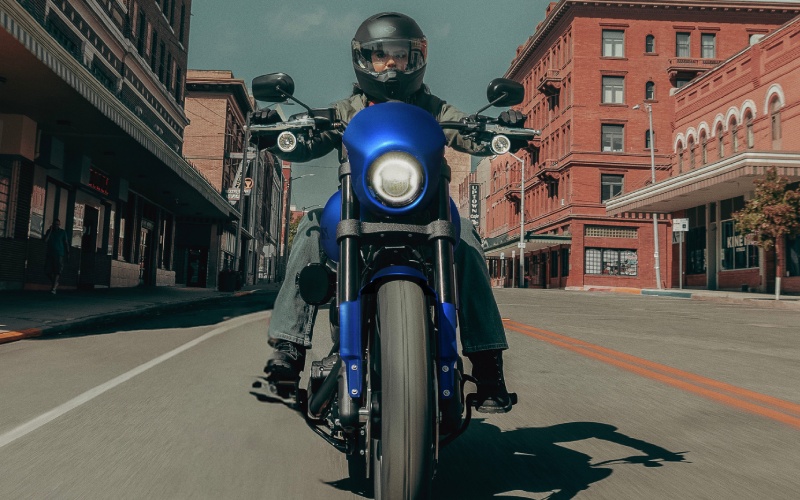
Harley-Davidson® designed the Milwaukee-Eight® 117 High Output to be the muscular heart of the Low Rider® S. It delivers 114 horsepower and 128 ft-lbs of torque, with the big-cube V-Twin delivering that classic pulse and immediate roll-on that makes short work of passing or steep grades. The Heavy Breather intake and 2-into-1 exhaust support that tuning, letting the engine breathe and rev with urgency. The Rebel 1100 DCT’s 1084 cc parallel-twin is refined and tractable, with a broad usable band and smooth throttle response via throttle-by-wire. It’s a strong unit for commuting and casual cruising, especially when paired with the DCT. Still, when you compare character and thrust, the Harley® V-Twin’s deeper well of torque and higher claimed horsepower translate to more decisive acceleration, particularly useful when overtaking on two-lane roads north of in Sellersville, PA where gaps open and close quickly.
Performance
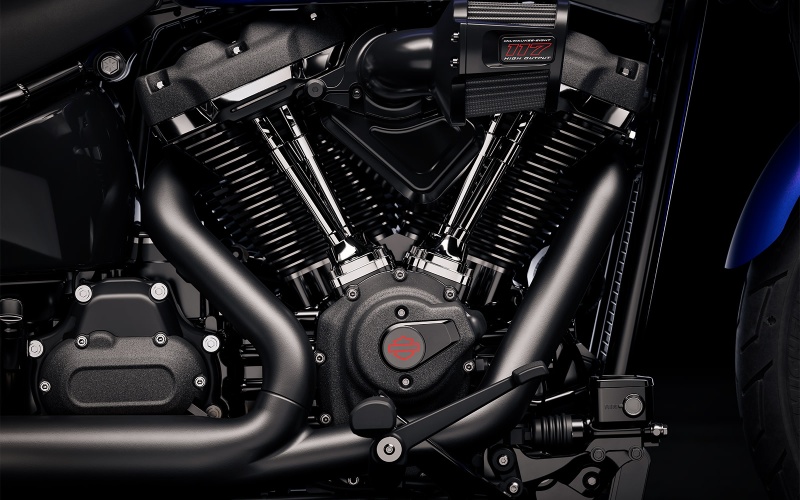
On real pavement, the Low Rider® S underlines its intent with 31.3 degrees of lean angle on both sides, stout braking with a 4-piston fixed front caliper, and suspension that stays composed over broken surfaces. Selectable Ride Modes tailor power delivery and intervention thresholds, while the cornering-optimized safety suite works in the background. Measured figures tell part of the story: 114 horsepower at 5,000 rpm and 128 ft-lbs of torque at 4,000 rpm, plus an estimated 47 mpg fuel economy that complements the 5-gallon tank. The Rebel 1100 DCT brings traction control modes, ABS, and user-friendly power delivery, but it does not add cornering-aware braking or traction. In the 2026 Harley-Davidson® Low Rider® S vs 2026 Honda Rebel 1100 DCT matchup, the Harley® creates a wider performance envelope, from quick roll-on thrust to confident side-to-side transitions on county roads where camber and grip change corner to corner.
Drive Train
The Low Rider® S uses a 6-speed manual with a primary chain (34/46) and carefully spaced overall ratios (down to 2.79 in 6th) that let you hold a gear longer, surf torque, and place the bike where you want without frantic shifting. Riders who thrive on rhythm and engine feel will appreciate how the manual box pairs with the 117’s grunt. The Rebel 1100 DCT’s 6-speed Dual-Clutch Transmission is a technical achievement and a welcome option for riders who prefer automatic shifting or fingertip paddle control. Both systems have clear strengths; however, riders focused on engagement and precise corner entry often prefer the Harley® manual’s direct connection. Add in the Low Rider® S’s strong engine braking assisted by Drag-Torque Slip Control, and you get a more settled chassis under aggressive downshifts rolling into a tighter line.
Chassis
Hardware choices define feedback. Up front, the Low Rider® S runs a 43 mm inverted single-cartridge fork that resists dive and keeps the contact patch planted under heavy braking. Out back, a hidden free-piston monoshock with hydraulic preload adapts to riders, roads, and loads. Braking is authoritative with a 4-piston fixed front caliper and floating rotors. Wheels are Black Radiate Cast Aluminum wrapped in Michelin Scorcher 31 rubber that bites confidently as the pace rises. The Rebel 1100 DCT uses a 43 mm conventional fork and dual nitrogen-charged rear shocks. The setup is compliant and easygoing, but the Harley®’s inverted fork and monoshock layout give it the edge in chassis rigidity and composure when you’re linking sweepers beyond in Sellersville, PA or standing the bike up and driving hard onto a straight. The result is a ride that feels carved rather than coaxed.
Electric
Lighting on the Low Rider® S is all LED, from the headlamp to the signature position lamp and turn signals, for bright, conspicuous visibility day or night. A 4-inch analog speedometer pairs with a comprehensive digital display showing gear, fuel level, ride modes, heated gear status, traction control, ABS, TPMS, cruise control indicator, and more. The Rebel 1100 DCT’s 5-inch color TFT brings modern connectivity, including Honda RoadSync for smartphone integration, music, and navigation prompts, plus cruise control that’s welcome on longer slogs. If you prioritize glanceable, classic instrumentation with the right ride-critical data and a built-in TPMS safety net, the Low Rider® S delivers the essentials without distraction. If you prefer deeper phone integration, the Honda’s interface is solid, though it does not offset the Harley® advantage in cornering-aware safety tech and chassis performance.
Rider Safety Enhancements
Harley-Davidson® Rider Safety Enhancements are tuned to be a quiet guardian that steps in only when needed. Cornering Enhanced ABS (C-ABS) modulates brake pressure based on lean, while Cornering Enhanced Traction Control (C-TCS) meters power to preserve drive mid-corner. Cornering Drag-Torque Slip Control (C-DSCS) tempers rear-wheel slip during aggressive downshifts or throttle closures, and TPMS keeps you informed about tire pressure—vital for handling and tire life. The Rebel 1100 DCT includes ABS and Honda Selectable Torque Control with multiple ride modes, which are valuable on wet or variable surfaces. However, without cornering-aware intervention or TPMS, the Honda leaves more to rider feel when lean angles increase or pavement surprises. On Bucks County’s patchwork roads and the rolling approaches toward Allentown, PA, those Harley® systems provide tangible confidence.
Why Choose the 2026 Harley-Davidson® Low Rider® S in Sellersville, PA
When we talk with riders at Freedom Valley Harley-Davidson® in Sellersville, PA, we hear the same priorities: strong real-world acceleration, a chassis that rewards commitment, and technology that helps rather than distracts. The Low Rider® S hits those marks with authority, matching stout V-Twin performance to a stable, athletic platform and a safety net calibrated for the way people truly ride around here.
- Performance edge: 114 HP and 128 ft-lbs, Heavy Breather intake, and a performance 2-into-1 exhaust deliver immediate, confident thrust.
- Confidence technology: Cornering-optimized ABS and Traction Control plus TPMS work in the background when the road gets unpredictable.
- Ownership fit: Longer range from a 5-gallon tank and a supportive solo seat suit Bucks County loops without constant stops.
For riders weighing 2026 Harley-Davidson® Low Rider® S vs 2026 Honda Rebel 1100 DCT, our recommendation is the Low Rider® S for its deeper performance envelope and confidence-inspiring manners on real roads.
Request more 2026 Harley-Davidson® Low Rider® S vs 2026 Honda Rebel 1100 DCT in Sellersville, PA information
The comparison of 2026 Harley-Davidson® Low Rider® S vs 2026 Honda Rebel 1100 DCT highlights two different paths to modern cruising. The Honda’s DCT, TFT, and connectivity make it approachable and tech-forward. The Harley® doubles down on factory performance with a stronger engine, inverted fork, monoshock control, and a cornering-aware safety suite that pays dividends on Bucks County’s imperfect pavement and the quicker runs that connect in Sellersville, PA to nearby townships. At Freedom Valley Harley-Davidson® in Sellersville, PA, we stand behind the Low Rider® S because it pairs speed with stability and technology with tact, giving riders a platform that grows with their skill and ambition. If your rides often stretch from town to countryside and back, and you value authoritative thrust, poised handling, and safety tech that has your back, the Low Rider® S is the smarter long-term choice.