
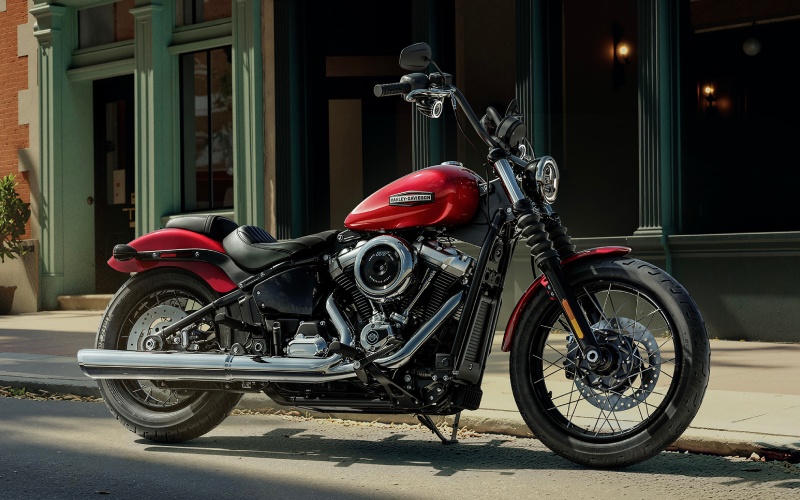
Freedom Valley Harley-Davidson® - 2026 Harley-Davidson® Street Bob® vs 2026 Honda Rebel 1100 - Which fits shorter riders best around Whitehall Township, PA?
Shorter riders often ask a straightforward question when comparing modern cruisers: which bike lets me get both feet down, settle in with relaxed reach to the controls, and still feels composed just off idle and at urban speeds? We hear it all the time in conversations about the 2026 Harley-Davidson® Street Bob® vs 2026 Honda Rebel 1100. Both are accessible machines, but they go about fit and feel in different ways. The Street Bob lists a 25.8-inch laden seat height, while the Rebel’s seat height is 27.9 inches. That two-inch delta matters, not just at stoplights, but also when rolling at walking pace, backing into a spot, or transitioning across angled driveways common around Whitehall Township, PA. Yet seat height is only part of the story. Weight distribution, chassis geometry, and how early torque arrives all shape confidence for riders of every inseam.
The Street Bob’s Softail geometry — 64.2-inch wheelbase, 30-degree rake, 6.2 inches of trail — feels calm and planted at a crawl. The Milwaukee-Eight 117’s 120 ft-lbs of torque at 2,500 rpm means you do less clutch feathering to get moving, especially helpful if you prefer shorter shifts and minimal fuss in traffic. The low, narrow saddle lends an easy reach to the ground despite the bike’s substantial presence. By contrast, the Rebel 1100 is tailored for nimbleness. Its 59.8-inch wheelbase and 28-degree rake deliver quick steering and an approachable stance for a broad range of riders. The parallel-twin’s tractable nature makes it hard to stall and friendly in parking lots. Still, if your priority is flat-foot assurance and a stable, slow-speed gait, the Street Bob’s combination of seat height and geometry gives it an edge for shorter riders who want that extra margin of comfort.
Fit is more than a number
Several elements influence how “short-rider friendly” a motorcycle feels beyond the published seat height. The Street Bob’s saddle shape is helpful — it narrows where it counts, reducing splay at the hips and allowing more direct contact with the pavement. Peg position also plays a role. With the Harley-Davidson®’s mid controls, many riders report a natural bend at the knee and easy boot placement when stopping. The Rebel’s rider triangle aims to split the difference between relaxed and sporty, and its compact engine allows a tight package overall. Still, for riders who value a low, secure stance without leaning the torso forward, the Street Bob’s ergonomic balance tends to inspire immediate confidence.
Slow-speed confidence around Whitehall Township, PA
Local streets and mixed surfaces amplify slow-speed differences. In neighborhoods around Whitehall Township, PA — with angled intersections, crowned roads, and off-camber driveways — the Street Bob’s longer trail helps the front end feel steady at a walking pace. The belt final drive is smooth and quiet, so on-the-clutch adjustments won’t be accompanied by chain lash. The Rebel’s lighter curb weight and compact wheelbase aid maneuverability, especially for riders who prefer an ultra-light steering feel. But once the road gets patchy, the Harley-Davidson®’s planted nature and early torque reduce the need for throttle juggling, making low-speed composure feel almost effortless.
Tech that supports the rider
Modern rider aids can be decisive for newer and shorter riders. The Street Bob’s Rider Safety Enhancements add ABS, Traction Control, Drag-Torque Slip Control, and TPMS, plus cornering-aware variants that help maintain control when braking or accelerating while leaned. That last part is particularly useful during those slow, tight turns across a side street when a surprise pothole appears mid-corner. The Rebel counters with ABS, Honda Selectable Torque Control, and wheelie control. These are excellent in their own right and contribute to predictable behavior in varied conditions. If your daily rides include frequent low-speed turns, off-angle stops, and occasional gravel dustings at intersections, cornering-aware systems can nudge the confidence meter even higher.
What about highway stretches and weekend loops?
Even if you prioritize shorter-rider fit, highway assurance matters. The Street Bob’s geometry and weight produce a calm, unflustered feel as speeds rise, which cuts down on steering corrections when crosswinds and passing trucks get involved. The Rebel’s lighter build is easy to position, but the Harley-Davidson®’s longer wheelbase and additional trail deliver the kind of straight-line stability that encourages relaxed shoulders and steady breathing on longer stints. For many riders, a calm highway personality is just as important as easy reach to the ground; it shrinks the learning curve and makes bigger riding days feel achievable.
- Seat height and shape: The Street Bob’s 25.8-inch laden seat and narrow midsection help shorter inseams plant both boots with less splay at the hips.
- Low-rpm torque: The Milwaukee-Eight 117 produces strong torque early, reducing clutch work when pulling away or balancing over uneven patches.
- Cornering-aware safety tech: C-ABS and C-TCS support control during slow, tight turns — a benefit when navigating angled intersections and driveways.
For the most confident stance and a relaxed, low-effort ride that scales from daily errands to backroad loops, many shorter riders ultimately prefer the Street Bob’s combination of seat height, torque delivery, and calm steering. That doesn’t make the Rebel 1100 a poor fit — it remains a friendly, competent machine — but if you want the lowest, most grounded feel with reassuring chassis manners, the Harley-Davidson® makes a compelling case.
Frequently Asked Questions:
Is the 25.8-inch seat height on the Street Bob measured with a rider on board?
Harley-Davidson® lists 25.8 inches as the laden seat height, which reflects typical rider weight and fluids. That gives a more realistic idea of how low the bike feels in the real world.
Can riding boots make a difference for shorter riders on either bike?
Yes. Even an extra half-inch of sole thickness improves flat-foot confidence. Pair that with the Street Bob’s narrow saddle front and you can often turn a cautious tiptoe into a confident stance.
How do rider modes help at low speed?
Rider modes tailor throttle response and traction control. On the Street Bob, Selectable Ride Modes let you choose a softer response for slippery days or tighter spaces. On the Rebel, HSTC and throttle maps serve a similar purpose, dialing behavior to your comfort level.
Is smartphone connectivity necessary for shorter riders?
It’s not necessary, but it can be convenient. The Rebel’s RoadSync adds navigation and media control on the TFT, while the Street Bob emphasizes clear, essential ride data and status indicators. Prioritize what helps you focus on balance and control.
When you are weighing the 2026 Harley-Davidson® Street Bob® vs 2026 Honda Rebel 1100 through the lens of shorter-rider comfort, the Street Bob’s low laden seat height, stable geometry, and abundant low-end torque deliver an easy, confidence-building foundation. If you want to explore fitment options and ergonomic tweaks — from seats to bar positions — our team at Freedom Valley Harley-Davidson® is here to help, serving Norristown, Whitehall Township, and Lansdale with practical guidance grounded in real-world riding.