
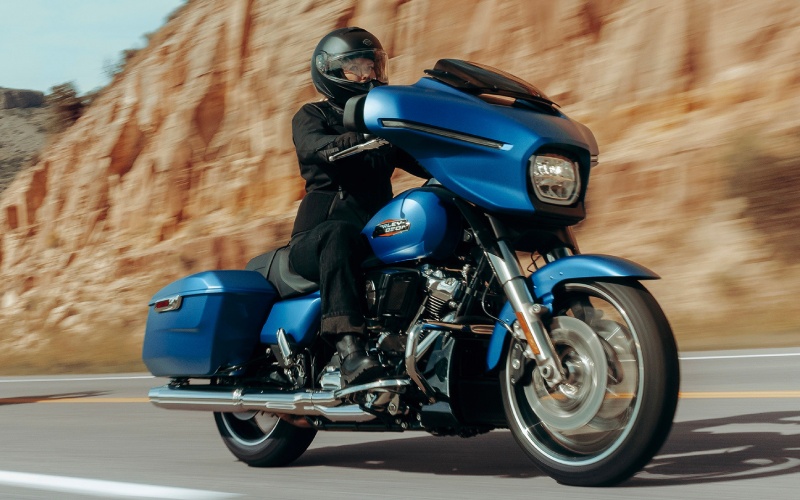
Freedom Valley Harley-Davidson® - Which infotainment system serves riders better around Whitehall Township, PA — 2026 Harley-Davidson® Street Glide® or 2026 Indian Chieftain?
What riders mean by “better” when they ask about infotainment
When local riders ask which infotainment system is better on a modern American bagger, they’re usually talking about a blend of screen clarity, navigation depth, ease of use with gloves, and seamless Apple CarPlay integration. The two heavyweights in this conversation are the 2026 Harley-Davidson® Street Glide® and the 2026 Indian Chieftain. Each delivers a full set of touring features, but they take notably different approaches at the dash. If you ride year-round through changing light, weather, and traffic in and around Whitehall Township, PA, those user-experience details matter every single mile.
Below, we break down the core differences that riders notice most: display size and readability, CarPlay implementation, navigation and vehicle data, audio capability, control logic, and how each system feels after hours in the saddle. While both platforms are capable, many riders find that one setup reduces distraction, simplifies routine tasks, and keeps the most important information front-and-center without extra taps.
Display size and on-road readability
The Street Glide® anchors its cockpit with a 12.3-inch full-color TFT running Skyline™ OS, which consolidates gauges, navigation, media, and communications into a single, customizable view. On the road, the larger canvas means bigger map tiles, clearer turn prompts, and legible text without squinting. You’ll also notice fast, fluid transitions when toggling between tiles. The Chieftain’s RIDE COMMAND interface, by contrast, uses a 7-inch display. It’s a solid, functional size that’s familiar to many riders, but it inevitably shows less at any one time. If you value prominent data and route guidance that you can decipher at a glance, the Street Glide®’s larger, brighter screen is an advantage you feel from the first ride.
Readability isn’t only about diagonal inches. Anti-glare behavior, font choices, iconography, and UI spacing all influence how quickly you can process information. Skyline™ OS was designed with these elements in mind, allowing riders to keep attention on the road longer. That matters on busy stretches of MacArthur Road or when merging across multiple lanes to make a last-second exit.
Apple CarPlay and device integration
Both bikes support Apple CarPlay, but the details differ. On the Street Glide®, Apple CarPlay works via wired or wireless connection. That flexibility simplifies setup and lets you keep your phone in a secure pocket or in-fairing storage without fussing with cords. The Chieftain supports Apple CarPlay on RIDE COMMAND as well, typically via wired connection. While a cable works fine for many, riders who mount and dismount frequently—or who hop between quick stops and longer stints—often prefer the hustle-free convenience of a wireless link on the Street Glide®.
Beyond CarPlay, both platforms offer Bluetooth pairing and phone functions, but Skyline™ OS integrates the bike’s vehicle information screens with a level of clarity that keeps vital stats (including TPMS alerts) right where you expect them. This is especially welcome when the temperature drops or traffic slows, and you want verification at a glance.
Navigation depth and map behavior
Navigation is about more than moving icons on a map. It’s how quickly you can load a route, interpret upcoming turns, and adjust course without diving through layers of menus. Skyline™ OS presents turn-by-turn guidance in a format that scales beautifully on the 12.3-inch display—with large prompts and smart layout priorities when audio, calls, or bike data are also on screen. The Chieftain’s RIDE COMMAND provides GPS navigation with full mapping features and works well, but the reduced real estate of the 7-inch display makes your on-screen hierarchy feel more compressed. If your rides shift from local errands to open-country rambles without warning, the Street Glide®’s roomy interface tends to keep you oriented with fewer taps.
Riders also ask about route visibility in direct sunlight and during night riding. In both cases, the Street Glide®’s display size and UI design help preserve contrast and clarity, reducing the urge to lean in for a closer look—something you really appreciate over longer runs.
Audio hardware and clarity
Audio quality depends on source material, wind noise, speaker design, and amplifier power. The Street Glide® includes two 5.25-inch fairing speakers driven at 50 watts per channel. It’s a clean, dynamic baseline that holds up at highway speeds and pairs well with the Batwing fairing’s wind management. The Chieftain lists standard audio and highlights the potential for high-output systems—up to 400 watts with accessories that include fairing and saddlebag speakers. That upgrade potential is impressive, though many riders evaluate stock performance first. At that baseline, the Street Glide®’s tuning and signal path through Skyline™ OS deliver balanced results, with user-friendly volume and EQ access without digging through menus.
If you plan to expand your sound system later, both platforms support accessory upgrades. The difference is how confident you feel with the factory mix on day one—and how easily you can control it without breaking focus in mixed urban and suburban traffic.
Controls, menus, and ride-long usability
Modern infotainment wins or loses on how it feels to live with for several hours. Riders repeatedly call out the Street Glide® for its intuitive menus, responsiveness to inputs with gloves, and the way Skyline™ OS aligns essential data with ride mode, bike status, and navigation. The Chieftain’s RIDE COMMAND is straightforward once learned, but the smaller screen and denser layout can require more switching between views to surface the same breadth of information.
In practice, “fewer taps” and “bigger data” add up to less cognitive load—especially when you’re threading through weekend traffic on Route 22 or rolling across changing speed zones headed toward the Lehigh Valley. The more the dash helps you stay in the loop without tugging attention away, the more relaxed and precise your ride becomes.
Where safety tech intersects with the dash
Infotainment and safety live side by side. The Street Glide® incorporates Harley-Davidson® Rider Safety Enhancements, including Cornering Enhanced ABS and Traction Control, Drag-Torque Slip Control, Vehicle Hold Control, and TPMS. Skyline™ OS displays relevant statuses clearly and unobtrusively. The Chieftain includes ABS, TPMS, and ride modes as well, delivering a confident base. For riders who prize cornering-aware interventions and the way those aids communicate via the dash, the Street Glide®’s integration feels a step more advanced.
None of these systems replace rider skill, but thoughtful integration helps you make better decisions faster by surfacing the right information at the right time. That’s a key reason many touring riders gravitate toward the Street Glide® when comparing dashboards and safety complements together.
Bottom line for Whitehall Township, PA riders
If your definition of “better infotainment” means the biggest, clearest display with wireless CarPlay, fast menu logic, and tight integration of bike data and navigation, the Street Glide® and its 12.3-inch Skyline™ OS earn the nod. If your preferences lean toward a familiar, compact interface with a power-adjustable windshield and strong accessory audio potential, the Chieftain remains appealing. Most riders who put a premium on glanceable mapping and streamlined control ultimately favor the Street Glide® cockpit for daily commuting, weekend loops, and longer trips alike.
Freedom Valley Harley-Davidson® is committed to helping you understand not just what each system can do, but how it feels to use on your daily routes—whether you’re hopping between errands or spending hours exploring the scenic stretches serving Norristown, Whitehall Township, and Lansdale. When it comes to clarity, control, and sheer on-road usability, the Street Glide® infotainment package consistently stands out in real-world riding.
Frequently Asked Questions:
Does Apple CarPlay work wirelessly on both bikes?
The Street Glide® supports wired or wireless Apple CarPlay, while the Chieftain typically uses a wired connection. Wireless pairing reduces setup time and cable clutter on frequent stops.
How big is the screen on each motorcycle?
The Street Glide® features a 12.3-inch full-color TFT running Skyline™ OS; the Chieftain uses a 7-inch RIDE COMMAND display. The larger screen helps keep maps and key data legible at a glance.
Are navigation prompts easy to follow in bright light?
Both systems are designed for outdoor readability, but riders often report the Street Glide®’s larger screen and UI spacing make prompts easier to read quickly in changing light.
Can both systems show bike information like TPMS?
Yes. The Street Glide® integrates vehicle data into Skyline™ OS, including TPMS alerts. The Chieftain’s RIDE COMMAND can also display tire-pressure information and additional bike data.
Which platform has stronger audio at highway speed?
Both offer solid stock audio and accessory upgrade paths. Riders frequently find the Street Glide®’s stock tuning and 50-watt-per-channel setup deliver clear sound at speed, with the Chieftain offering notable upgrade potential through accessory systems.